
Decades of Impact in Hanoi Bears Fruit

Updated: Jun 4
For REI's Otology Team, the fall 2025 visit to Hanoi, Vietnam was much more than a professional trip. It was the continuation of decades-long relationships, the celebration of shared accomplishments, and a glimpse into a future that could transform hearing healthcare throughout Vietnam and beyond.
Led by Dr. Rick Kopke, the team included Dr. Michael O'Leary, Dr. Dayton Young, Erica Simas and Diana Young. Together, they traveled to Hanoi with four primary objectives:
Strengthen relationships with Vietnamese partners and former exchange fellows.
Advance discussions regarding a proposed Temporal Bone Surgical Dissection Lab (TBL) in Hanoi.
Continue collaboration with Bach Mai Hospital toward establishing a Cochlear Implant (CI) Program.
Support the Vietnamese Audiological Association (VAA) as keynote speakers at its National Conference.

Relationships That Last for Generations
At the heart of REI's work is the belief that meaningful change happens through relationships. Throughout the trip, the team shared meals, conversations and fellowship with long-time partners, former fellows, hospital leaders, university faculty and members of the VAA.
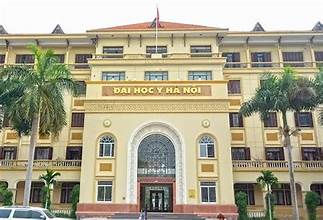
All of this provided opportunities not only to celebrate professional accomplishments but also to recognize the friendships that have developed through years of collaboration among REI, the Hough Ear Institute (HEI), the National Otolaryngology Hospital (NOH), Bach Mai Hospital, Hanoi Medical University (HMU) and the VAA.
The impact of these relationships is evident in the growing network of Vietnamese physicians who have received specialized training and are now sharing their knowledge with colleagues across the country.
Advancing Hearing Healthcare Through Education
One of the highlights of the trip was participation in the VAA National Conference, where the team was able to engage with a broad audience of hearing health professionals from across Vietnam.
Dr. Dayton Young presented on indications for cochlear implantation, offering practical insights into a rapidly evolving area of care. Dr. Michael O'Leary delivered presentations on advances in skull base surgery and the management of fungal outer ear infections, topics that generated significant interest among attendees.
Dr. Kopke shared fascinating material from the late Dr. Jack Hough's extensive catalog of congenital ear malformations. He also addressed the growing economic and societal burden of hearing loss, highlighting its connection to cognitive decline and dementia.
The presentations sparked important conversations about innovative approaches to hearing healthcare, including the use of mobile technology and new service delivery models that could help address Vietnam's increasing hearing health needs.
By participating in the conference, the team was able to extend its impact far beyond individual institutions and connect with many of the VAA's nearly one thousand members and hearing healthcare providers.

A Vision for the Future: The Temporal Bone Lab
While the conference provided a significant platform for education and collaboration, the most consequential discussions of the trip centered on a transformative new initiative: the proposed Temporal Bone Surgical Dissection Lab.
Temporal bone labs are essential training facilities where ear surgeons develop and refine highly specialized surgical skills. Access to this type of training can dramatically improve patient outcomes and expand local capacity for advanced ear surgery.
The project began when an HEI partner expressed interest in supporting the creation of a temporal bone surgical training lab in Vietnam. HEI CEO Dr. Matthew West asked Dr. Kopke to explore the concept with REI and Vietnamese partners.
Working closely with Mrs. Lien, director of REI's Vietnam office, representatives from REI, HEI, NOH and HMU began developing a framework for a Memorandum of Understanding that would establish the foundation for the project should funding become available.
Meetings with Dr. Canh and representatives from NOH and HMU resulted in productive dialogue, strong alignment on key priorities and a shared commitment to moving forward together.
Perhaps most exciting was the opportunity for the team to visit one of the potential sites for the new lab.
If realized, the Temporal Bone Lab would become a state-of-the-art training center, empowering HEI-trained Vietnamese otologists and international specialists to provide advanced surgical education throughout Vietnam and the broader region.
Beyond its technical value, the lab would serve as a lasting symbol of collaboration, creating ongoing opportunities for professional exchange, friendship, mentorship and cross-cultural partnership for years to come.
Building on Momentum
The team's discussions with Bach Mai Hospital also continued to move forward plans for establishing a cochlear implant program, another initiative with the potential to significantly expand access to life-changing hearing interventions.
Taken together, these efforts reflect a larger vision: strengthening local capacity, equipping healthcare professionals and ensuring that expertise continues to multiply long after a training program or exchange visit concludes.
As Dr. Kopke reflected:
"I am always amazed and heartened by how our colleagues in Vietnam apply and share what training and teaching we give with a real heart for elevating otology care for their own people and the people of the region. We see this clearly with each visit."
The fall 2025 trip was a reminder that the seeds planted through years of partnership continue to bear fruit. What began as educational exchanges and professional collaboration has grown into a thriving network of leaders committed to improving hearing healthcare throughout Vietnam.


Comments