
The Key to Working Cross-Culturally Long-Term

by Josiah Ng, REI Field Staff and Professor at Samarkand International University of Technology, Uzbekistan
It was only my third day as a university lecturer in Uzbekistan, and I was already surprisingly frustrated.
But my frustration wasn’t with the students, nor the work. It was because I was locked out of the school’s design lab where I teach, even though I had the key.
Three days earlier, the Head of Department had warmly welcomed me, placing a shiny but slightly stained key into my palm. I was excited.
My wife and I had after all spent the year preparing to move to Uzbekistan with our two sons, having been here before for a short-term trip with REI. I was all ready to build people to build nations for a longer term and impart design and communication skillsets to the youths of this emerging nation.
And now, here I was, standing outside a locked door, heart racing, brows furrowed. On day one, I spent ten minutes (and a fair amount of brutal force) trying to fit the key into the keyhole. I even wondered if I had been given the wrong key. Days two and three were slightly better, but I found myself twisting my wrist into awkward, almost yoga-like positions just to unlock the door. The early students probably thought I was doing an 'interpretive dance’ and the cleaning lady laughed.
This was to become my daily routine, wrestling with the lock and key and I actually found myself beginning to dread my mornings in school (I don’t dread the work. I just dread unlocking the door.)
My family and I have been in Uzbekistan for three months now and in many ways, it’s felt the same as trying to unlock that stubborn door. We thought we had the “keys” to do our work here, but everything seemed to take a little more effort to ‘unlock’.

WRONG KEY? WRONG DOOR?
Confident of my teaching skills (hey, I had good feedback last year), I did all I could in my lectures (short of interpretive dances). Yet, half my students failed their midterms. I later realised it was because they didn’t understand much of what I was saying due to language barriers (maybe I should have done interpretive dances)
And at home, things weren’t easier. Our eldest son was hurt by a local friend whom he thought was going to be his buddy. Our youngest struggled in a Russian-speaking kindergarten. Once, he’d asked a classmate if she wanted to play ‘hide-and-seek’, but she just kept misunderstanding that he was telling her that he felt ‘sick’
One night, after a difficult day, our sons asked, “Papa, Mama, why do we even have to be here? Why us? Why can’t we go back?” Looks like even having established our ‘whys’ multiple times as a family, the doubts were still returning
And then came another blow: the university announced that it still could not pay staff salaries. It had been six months since our colleagues were paid. This was despite the university management’s tireless negotiations with financiers.
Did we have the wrong keys? Or were we at the wrong door?
UNLOCKING IT ALL
Desperate to make sense of what was happening, I went back to what we’d been taught during pre-field training with our Director of Training, Sean McKelvey.
I thought about the stories shared by field staff who had gone before us, serving across the six emerging countries where REI operates. Their journeys, while different, tended to share a similar pattern. There’s the initial doubt, real struggles, and then a renewed commitment to the “why” that started it all. One of our trainers during pre-field training called it the “cultural adjustment cycle."
Sounds like these “key struggles” were, in fact well, “key” to thriving on the field.
I enjoy the work. I just don’t enjoy unlocking the door. And yet, unlocking the door is part of the work, especially in these first few months, as families like ours learn to adjust.
True enough, in the following weeks, I discovered how to work with my students to help them “experience the lessons” better. Much of our work as REI field staff isn’t so much to solve problems for locals, but to work with them to do so.
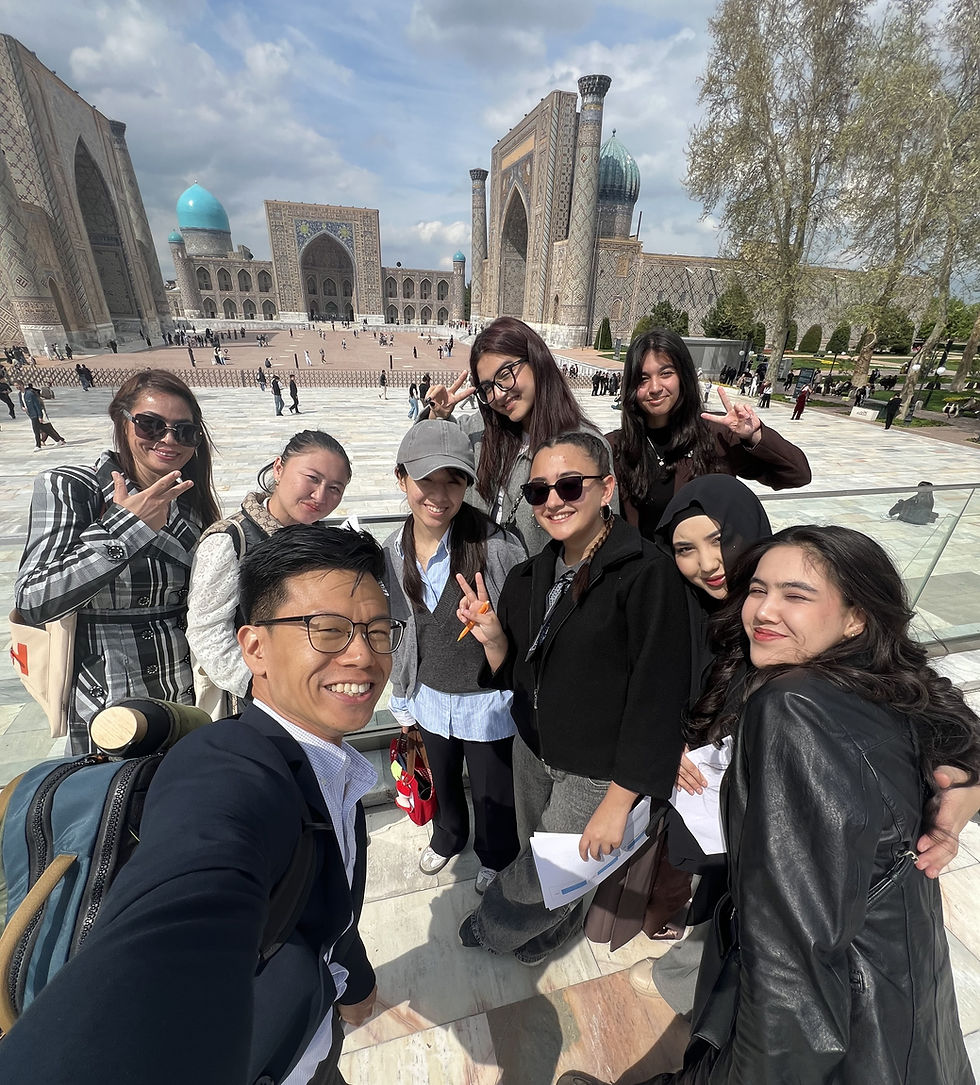
My sons still question their place here, but we’re learning to walk with them through it and give them space, staying united as a family, and trusting that they too will grow through their own adjustment.
We’ve also had front row seats to witness how our REI teammates here have encouraged our university colleagues despite the financial woes. From writing cards, to buying lunches, strawberries, and even providing financial assistance, turns out that the people we build are not just locals, but also co-workers from different nations.

Our REI country leader, Jill Vernon, was inspired one week to buy bags of rice for some of the professors. Though inexpensive, it served as a valuable way for the professors to know that they were loved.
“But I can’t give you anything in return,” one of them said.
Jill smiled. “There is already a transaction. I give you rice… you give me joy, and it is my joy to give.”

Nearby, I spotted a bowl of candy labeled “joy.” Cheekily, I picked one up and handed it to the professor, “Quick, give this to Jill.”
And in that moment, I was reminded of the privilege to be able to serve, even when things feel uncertain. It indeed was a joy to give in different ways.
And the key? Turns out, all I needed to do was oil it. This season has been teaching us that indeed, it’s not about forcing doors open, but learning to adapt, to listen, and to embrace challenges as opportunities to grow as effective global workers.
In many ways, our family is still adapting, and our cultural adjustment cycle continues, but we are choosing to be open about our struggles because we hope prospective field staff will appreciate the journey that they are bound to go through.
It just takes time, and you just might need some “oil”. So be encouraged to know that you’re not alone, and soak in the joy of giving. You don’t have the wrong key.


Comments